
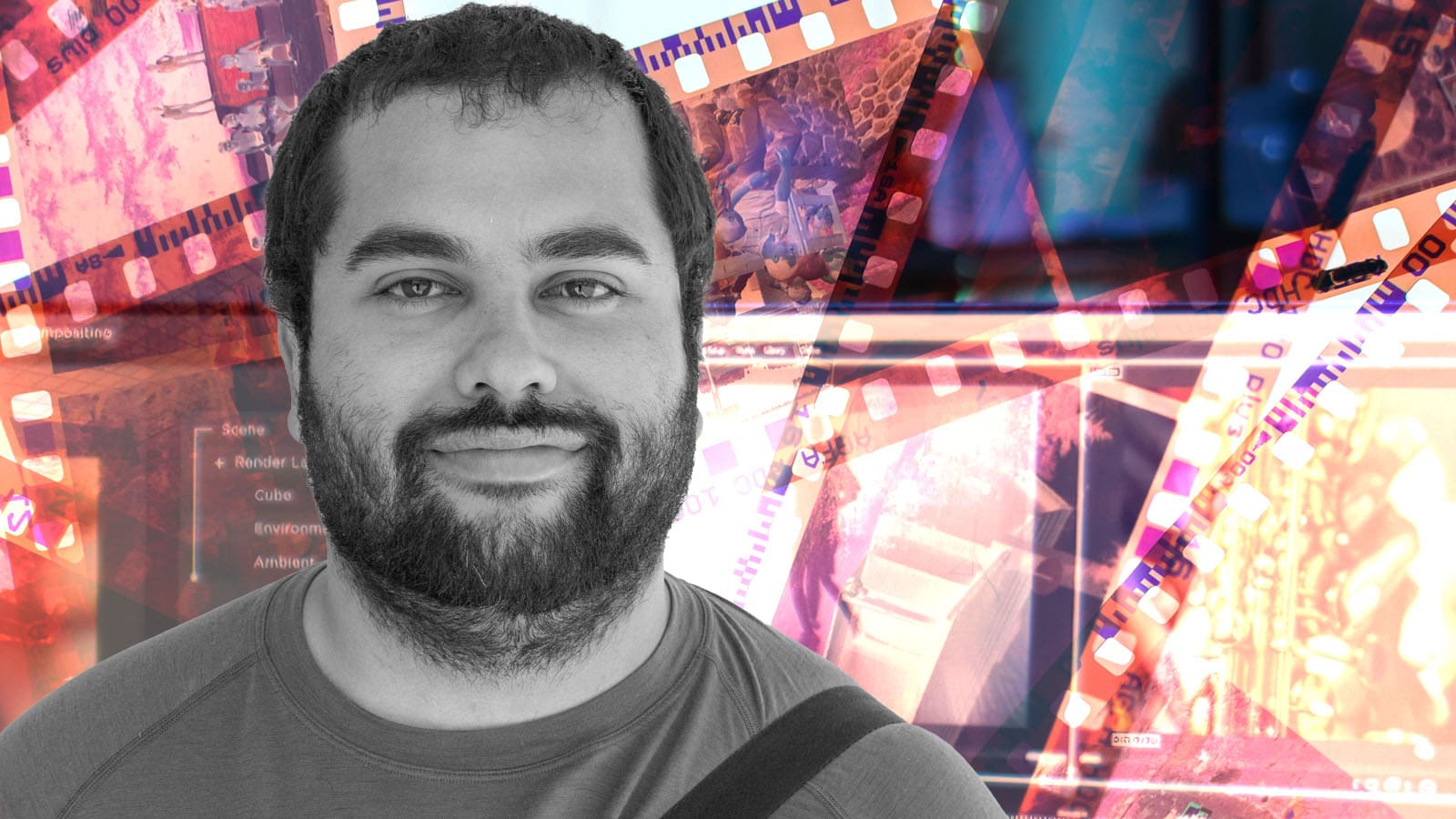
Isaiah Galante describes himself as a filmmaker who “drifts everywhere,” but his lens always seems to pivot back to one specific coordinate: home.
For Galante, the high desert isn’t just a location; it is a character in itself. “We live in the most beautiful place on Earth, and it hasn’t been really showcased that way,” he says. He speaks of the mountains and the Rio Grande Gorge with a reverence usually reserved for religious artifacts. “There’s nothing to describe them. Our canyon. Nothing to describe it.”
Galante is a former student turned mentor in the Film and Digital Media Arts (FDMA) program at UNM-Taos. He has returned to the classrooms where he once learned the basics, now helping a new generation of students navigate the technical hurdles of production. He works alongside instructor Peter Walker, dropping into courses like Video Production I and Intro to Film and Digital Media Arts to offer guidance.
His journey into filmmaking began with a pragmatic stubbornness. In the early days, he noticed a pattern among his peers. “Everybody wanted to touch the camera. Everybody wanted to direct,” Galante recalls. “Nobody wanted to be an editor in post-production.”
Seeing a gap, he decided to fill it. “I said, ‘I’m going to learn and figure it out. I don’t care what it takes.’” He practiced by stitching together stock footage or shooting clips on an iPhone 5 just to construct a narrative. That persistence paid off. While he admits he “may not be the best camera person,” his technical proficiency made him indispensable. “Everybody wants my color grading and everybody wants me to edit their videos,” he says. “That’s where I stand out the most.”
Now, he brings that specialized knowledge back to UNM-Taos. In the FDMA program, students often find themselves overwhelmed by the sheer scope of editing software. Galante steps in as a translator of sorts. When a student asks, “How does this editing technique work?” Galante can sit with them, deconstruct the process, and guide them through it. “Being able to mentor some of the students and guiding them and them using me as like an asset” has been a rewarding shift in perspective.
He sees a reflection of himself in the students—some are unsure of their specific path in film but remain “extremely motivated” to chase it. Galante believes that if the youth knew about the opportunities available locally, they wouldn’t feel the need to leave. “I think if people knew more that there was an opportunity here, the youth would stay here. They wouldn’t fall into darker paths,” he says.
This desire to illuminate a different path stems from his complex relationship with the town. He acknowledges that Taos has its struggles—poverty, drugs, and “a lot of darkness.” But his goal is to counter that narrative. “I’ve seen my hometown go up and down a lot, and it’s motivated me to bring positivity,” he says.
His ambitions are as wide as the landscape he films. While his “all time, biggest dream is ending world hunger,” his secondary dream is specific to his craft: “Filming a blockbuster movie, a huge movie, and filming a big TV show in town. In my hometown.” He envisions a production where the community comes together, creating a network that connects local talent with the industry.
For the students sitting where he once sat, Galante offers advice born from his own grind in the editing bay. He urges them to be active participants in their own careers.
“Don’t let life happen to you,” Galante says. “You go for it. If you chase the passion, everything else will chase you.”
It is a simple philosophy for a complex industry: master the craft, step out of the comfort zone, and let the work speak for itself.