For many Taos Lobos, getting to class is not as simple as a short commute. It is a daily calculation—of miles, money, and time—that can directly affect whether they can show up, stay enrolled, and succeed. Recognizing this challenge, UNM-Taos Thrive: Food and Resource Center, with the support of community partners, is helping turn transportation barriers into meaningful solutions.
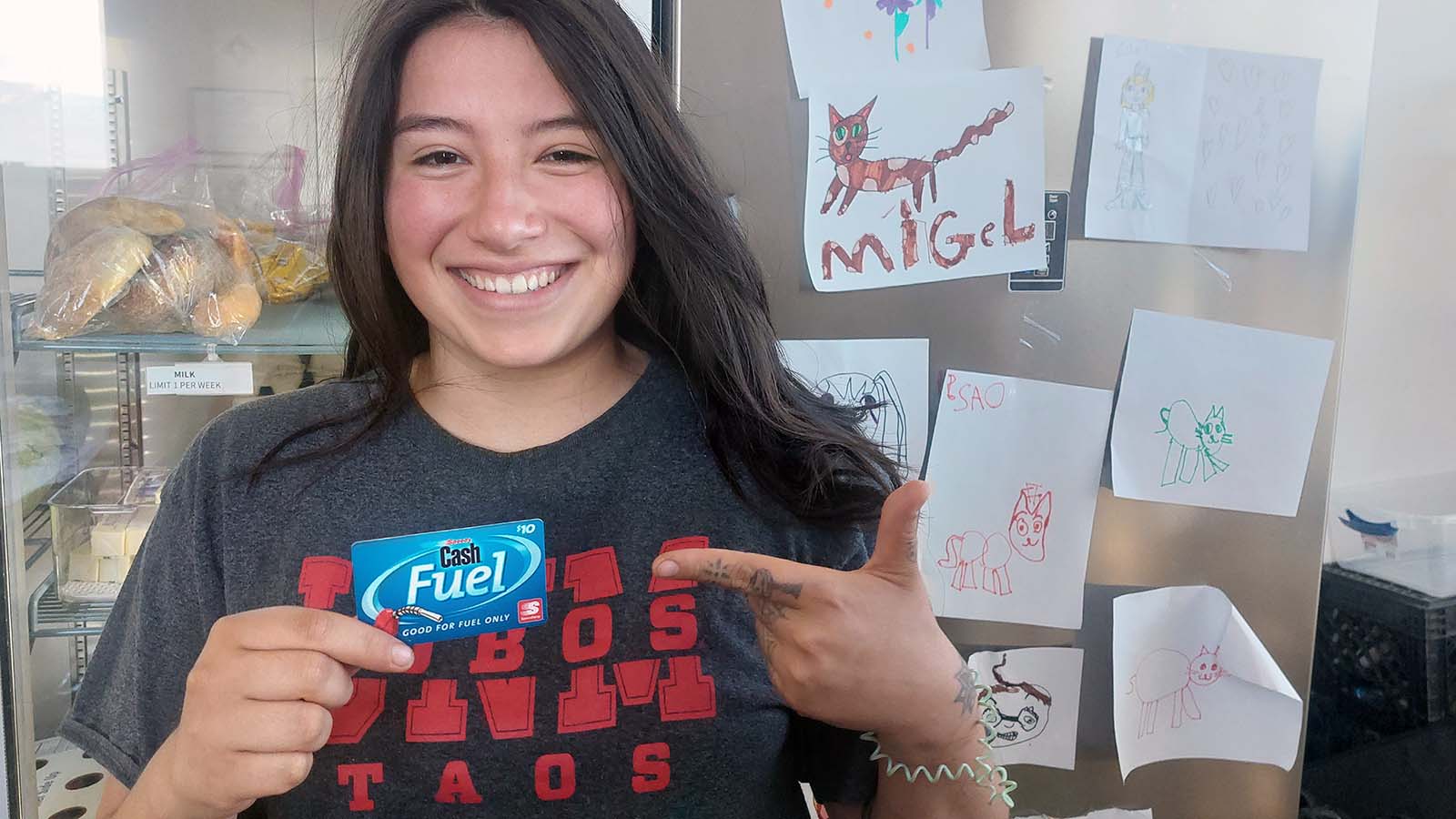
Over the past year, the LOR Foundation has helped UNM-Taos Thrive provide gas assistance to 74 students, distributing more than 500 $10 gas cards. For students balancing the rising costs of housing, food, books, and fuel, this support has been more than a convenience—it has been essential. Many students report that without enough money to fill their tanks, they are sometimes forced to miss class or make difficult tradeoffs, such as skipping meals to afford gas. This financial strain is not only a logistical issue but also a significant source of stress that can interfere with academic progress.
The challenge is particularly acute in rural areas such as Taos County and the surrounding counties. UNM-Taos students frequently travel long distances to attend classes—commuting from Questa, Peñasco, Española, Angel Fire, Cerro, Albuquerque, and even Magdalena. Many students make these trips two to four times a week, and for those in internships or clinical rotations, travel demands increase even further. When distance combines with frequency, costs quickly add up—not just in fuel, but in time and wear and tear on vehicles.
The impact of the gas card program has been both immediate and measurable. Every student who received assistance reported improved attendance in at least one class, and all indicated they would like to see the program continue. Perhaps most telling, 76 percent of participating students shared that they would otherwise need to miss class without fuel support. These outcomes highlight a clear connection between transportation access and student success.
For students who did not receive gas cards, additional options are available. The North Central Regional Transit District (NCRTD) provides the free Chile Line bus service with stops serving Klauer Campus, alongside the MyBlue rideshare program—an on-demand, low-cost service that offers transportation for as little as $1 per trip. Looking ahead, the LOR Foundation has already committed to funding free MyBlue rides during the 2026–27 academic year for eligible riders living within 2 miles of bus stops, further expanding access to reliable transportation.
Building on this progress, UNM-Taos is partnering with New York-based MDRC to take a deeper, research-driven approach to transportation challenges. MDRC is a nonprofit, nonpartisan organization dedicated to improving the lives of people with low incomes through high-quality research and evidence. Through its Pathways Without Obstacles: Supporting Student Mobility project, MDRC is working with colleges in Northern New Mexico, Seattle, and southern Florida to examine how transportation barriers affect students’ ability to stay in school and maintain employment. At UNM-Taos, this partnership is bringing students directly into the conversation.
This fall, UNM-Taos Thrive will host student-led groups focused on identifying transportation solutions that reflect the realities of life in Taos County. Participants will receive stipends for their time, and the insights gathered will help inform future strategies, funding opportunities, and policy decisions. UNM-Taos will also be part of a collaborative effort with Northern New Mexico Community College and Highlands University. One college will be selected to receive $10,000 to implement the most promising transportation solution.
Students involved in these discussions have already made it clear that even modest support can have a big impact:
“The gas is expensive, so the gas cards really helped out for the semester. It wasn’t a whole lot, but something’s better than nothing—and it really made a difference for my three kids and me.”
“It has really helped out. It freed up some funds for groceries or to save a little bit of money. It doesn’t seem like a lot, but it adds up over time.”
These voices reflect a larger truth: transportation is not just about getting from point A to point B. It is closely tied to students’ ability to meet their basic needs, including food, housing, health care, employment, and childcare. When transportation is unreliable or unaffordable, the ripple effects can touch every part of a student’s life. The time and energy spent coordinating rides, navigating bus schedules, or managing financial stress can take away from what matters most—learning, working, and caring for family.
By contrast, when students have dependable ways to move between home, campus, and work, they are better positioned to fully engage in their education. Investments in transportation strengthen the impact of other support systems, from financial aid to advising to mental health services, ensuring they reach the students who need them most.
At UNM-Taos, the momentum is clear. Through partnerships with the LOR Foundation, MDRC, and NCRTD, we are not only addressing immediate needs but also laying the groundwork for long-term, sustainable solutions. What began as a response to a pressing challenge is evolving into a collaborative effort—one that puts student voices at the center and reimagines what access to education can look like in a rural community.